无师自通的创业路
这几年你会发现一个现象:越来越多年轻企业家,背后都有一位Coach。
有些Coach很有名,有些你甚至没听过,但他们都在同一个故事里出现 “有人带,所以我成功”。
我不否认Coach的价值,但我想写下另一种路径:没有Guru、没有系统、没有人手把手,一样能把一门手艺学到能卖、能交付、能长期活下去。
在2012年之前,我真正意义上 “跟过脚步” 的人,一个是Marco Chan 网络销售讲师他教会了我网络世界要学会讲故事,另一个就是我妈。


Brandonz | 不烂凳子
无师自通的创业路
这几年你会发现一个现象:越来越多年轻企业家,背后都有一位Coach。
有些Coach很有名,有些你甚至没听过,但他们都在同一个故事里出现 “有人带,所以我成功”。
我不否认Coach的价值,但我想写下另一种路径:没有Guru、没有系统、没有人手把手,一样能把一门手艺学到能卖、能交付、能长期活下去。
在2012年之前,我真正意义上 “跟过脚步” 的人,一个是Marco Chan 网络销售讲师他教会了我网络世界要学会讲故事,另一个就是我妈。
农历新年 (CNY) 就要来了!今年的农历新年将在2月17日开始。可是我只能在23日回到马来西亚。我也不确定能否获得请假的批准。工作与生活的平衡真是个挑战啊!希望大家都能顺利回家和家人团聚,共度这个重要的节日。
I am in deepest condolences to the families and the country who lost a person who tells the truth. I feel sad and unsafe that there is no longer anyone to tell me the truth about the world.
Hey各位privacy-conscious developers和AI enthusiasts!今天要proudly introduce我的latest project——Dialog Builder with OpenAI,这次是100% pure JavaScript and HTML构建,而且你的API keys只保存在local browser,我们完全不store任何sensitive data!马上体验demo 👉 https://dialogs.brandon.my/
我知道很多developers都worried about sharing API keys with third-party services。所以这个project采用了完全前端实现的设计理念:
// Example of local API key handling
const saveAPIKey = (key) => {
  localStorage.setItem('openai_api_key', key);
  console.log('API key saved locally only!');
};

// All API calls made directly from client
const fetchAIResponse = async (prompt) => {
  const response = await fetch('https://api.openai.com/v1/chat/completions', {
    method: 'POST',
    headers: {
      'Authorization': `Bearer ${localStorage.getItem('openai_api_key')}`,
      'Content-Type': 'application/json'
    },
    body: JSON.stringify({
      model: "gpt-3.5-turbo",
      messages: [{role: "user", content: prompt}]
    })
  });
  return await response.json();
};所有操作都在你的浏览器内完成,完全无需担心数据隐私!
这个tool特别适合:
虽然已经是pure client-side,但我们还有更多计划:
在这个data privacy越来越重要的时代,client-side AI solutions绝对是未来趋势。我的Dialog Builder就是一个很好的起点,让你在享受AI强大功能的同时,完全掌控自己的数据。
🎯 立即尝试:https://dialogs.brandon.my/
💡 记住:你的API key永远只留在你的设备上!
GitHub: https://github.com/phototix/OpenAI-TTS-Dialog
P.S. 如果你喜欢这个project,记得star我的GitHub repo哦!

Yo各位tech迷,今天我要share一个超级兴奋的project!我终于入手了一台NVIDIA A1000 GPU workstation,然后combine with最新的LLama models,通过Open WebUI搭建了一个完全属于我自己的AI chat和agent系统。Seriously,感觉就像当了一回Iron Man,拥有了自己的Jarvis!😎
Overall,这个project不仅让我experience了cutting-edge AI tech的power,还让我feel到了那种“未来已来”的excitement。如果你也是tech enthusiast,我真的highly recommend尝试build你自己的AI system。Trust me,那种拥有personal Jarvis的感觉,真的是无敌!🚀
有没有人也在玩AI agents?欢迎在comments分享你的experience!

各位朋友,你们有没有发现,现在很多软件都变成subscription-based了?Every month都要扣钱,真的很sian啊!💸 尤其像我这种搞IT的,需要用到各种tools,subscription fees加起来可以买很多碗laksa了咧!
But guess what?自从我开始用AI来generate code,我都不需要花更多的钱去买软件和电脑里的工具了!Self Built Apps 怎么做?都用AI给我生成出来。
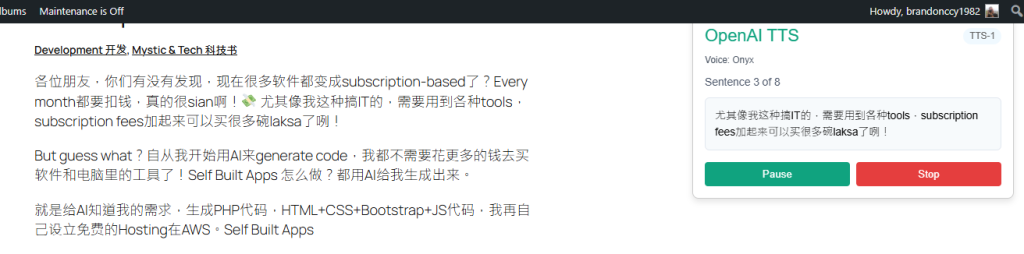
以下是一些我自己已经建立的Web Apps 和 一些辅助工具来自社群:Self Built Apps
Open Source Apps I Use:
所以啦,各位tech朋友,不要再傻傻付subscription了!Leverage AI的力量,build你自己的tools吧!如果你们有兴趣学how to do this,可以留言让我知道,我可能consider做一个小型的workshop哦!😉

Yo,各位拖延症晚期患者 & 生产力工具控!今天我要分享一个超级简单但极度实用的自动化方案——用 WhatsApp 打造个人专属任务管理系统!是的,你没看错,连App都不用装,直接在WhatsApp里收每日任务提醒、早晨鸡汤(误)、晚间总结,甚至还能帮你记录完成情况!
因为我懒!但又不想完全摆烂(偶尔还是要装一下自律)。市面上太多任务管理App,但每次都要打开另一个软件?太麻烦了啦! 既然我每天泡在WhatsApp里(谁不是?),那就让任务提醒直接怼到我脸上!
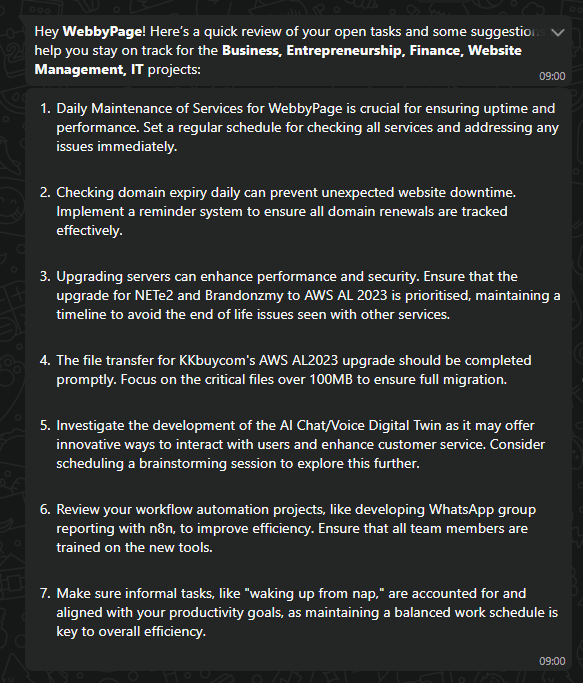
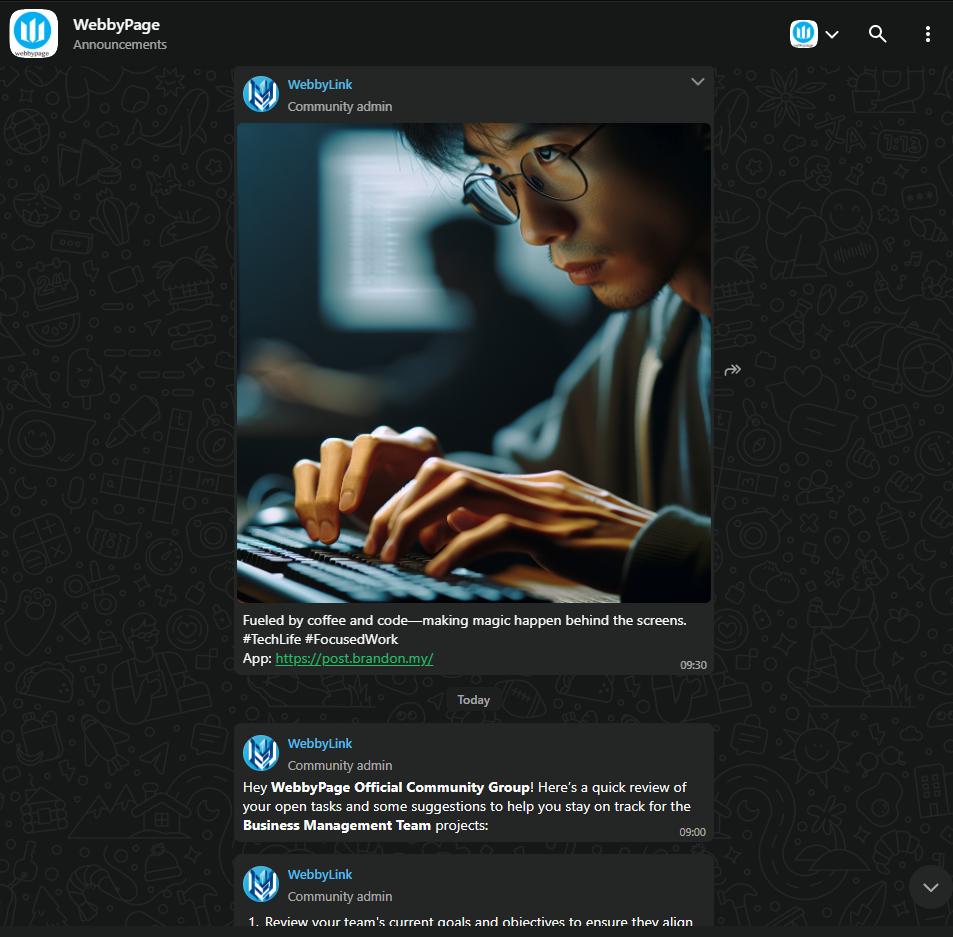
如果你也懒得开一堆App,但又想假装高效,这个方案绝对适合你!
总结:用自动化工具把琐事丢给机器,人类负责躺平+创造!如果你也搞了类似的操作,欢迎交流——或者吐槽我的简陋设计!🤣
🚨 免责声明:此方案可能导致你变得更懒,本人概不负责。
P.S. 代码?哼,才不直接给你!自己动手丰衣足食~(付费客户另谈,谢谢 😏)
Hey 各位大马朋友,如果你刚来Singapore工作 or 已经在这里打拼多年,this post 就是为你准备的!
Singapore 是一个高效但竞争激烈的社会,especially for Malaysians who 需要适应这里的快节奏。别担心,这篇指南会帮你 navigate 生活、工作、省钱、社交,让你更快 feel at home!
Conclusion 总结 作为 Malaysian in SG,you’re not alone!很多人和你一样在这里奋斗,只要掌握正确的方法,你不仅可以 survive,还可以 thrive!

Reflecting on my journey in the web development industry, it’s hard not to notice the 非專業化(de-professionalization) happening right before our eyes. 以前,我们的工作得到了应有的尊重和奖励,但现在却面临着许多挑战。
First, 低估 talent 感觉已经成为了常态. Many clients prefer to hire cheaper freelancers instead of investing in skilled developers. 我们花了很多时间学习和提升,却常常被忽视。
Then there’s crowdsourcing exploitation. It feels like full projects are demanded via contests, with little to no pay offered. It’s frustrating! 我常常想,难道我们不应该为我们的努力获得公平的回报吗?
Moreover, the 過度依賴 on no-code tools really undermines the need for actual developer expertise. 它们可能看起来方便,但质量有时候难以保证。
Unrealistic timelines are also making things worse. When clients rush us, it leads to poor-quality output. 有时候我希望他们能理解,一个好的项目需要时间。

And let’s not forget about scope creep abuse. Features are added without any extra pay or time. 这几乎是对开发者的不公平对待!
Then there’s non-tech management interference. It’s heartbreaking when our advice on architecture gets ignored. 我们是专业人士,应该听取我们的意见。
And how about the infamous “exposure” instead of pay? Offering visibility in place of fair compensation is just ridiculous! 我们的工作不是用眼球来换取的。
Worse yet, interns replacing pros has become a trend; free labor disguised as training. 他们在承担重要工作,但却没有得到应得的指导。
We also see a lot of people ignoring best practices. Skipping code standards and version control can lead to chaos down the road. 每个开发者都知道,规范化是保证质量的关键。
Finally, the price war tactics just destroy our value and professionalism. 不断的压价只会让整个行业走向低谷。
To wrap it up, the web development industry is facing a serious identity crisis. 我们需要重新审视我们的价值和专业性,才能让这个行业恢复应有的荣光。